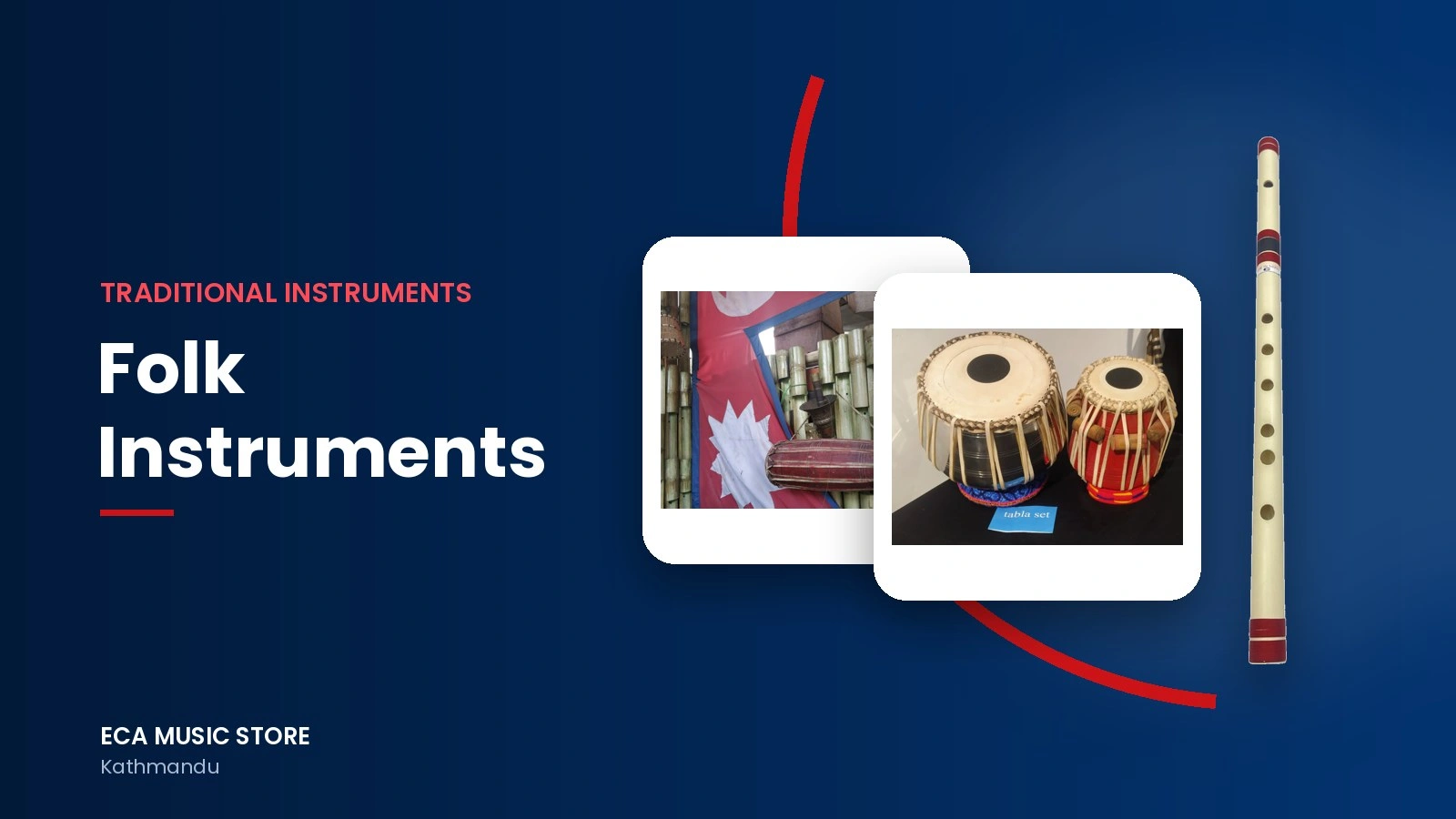
Long before electric guitars arrived, Nepali music was carried by a handful of instruments you can still hear at every festival, wedding and bhajan. Each is affordable, portable and a joy to learn. Here is a short introduction to the most popular ones.
Madal
The madal is the heartbeat of Nepali folk music. It is a barrel-shaped drum with a head at each end, played lying horizontally - often slung from the waist so the player can dance. The right head gives the sharp, ringing strokes and the left the deep bass. You will hear it in Maruni, Tamang Selo and almost every folk song. Madals come in a traditional wooden finish and a polished "glass" (fibreglass) finish that shrugs off damp.
Tabla
The tabla is a pair of drums: the smaller wooden dayan for the right hand and the larger metal bayan for bass. The black patch on each head, the syahi, is what gives tabla its pitched, singing tone. It is central to Hindustani classical music, bhajan, ghazal and Nepali light music. Tabla rewards a teacher: the strokes, called bols, are best learned in person.
Bansuri
The bansuri is the side-blown flute of South Asia, with six or seven finger holes and a soft, breathy voice. Traditional bansuris are cut from bamboo; a PVC bansuri plays the same way but will not crack in dry winters or warp in the monsoon, which makes it the sensible first flute for students.
Tinchha and jhyali
Tinchha are a pair of small hand cymbals joined by a cord, struck together to keep time in bhajan and kirtan. Their larger cousins, the jhyali, are part of the Panche Baja ensemble heard at weddings.
Harmonium
The hand-pumped harmonium accompanies singing in bhajan, kirtan and music classes across Nepal. We have a whole harmonium buying guide on octaves, reeds and stops.
Which one should a beginner choose?
- Want to play along with folk songs? Start with the madal.
- Drawn to classical or devotional music? Tabla or harmonium, ideally with a teacher.
- Love melody and want something you can carry anywhere? A bansuri.
- Joining a bhajan group? Tinchha are the easiest way to take part from day one.
Browse all our folk and traditional instruments.
Buying from ECA Music Store
Every instrument we sell is 100% genuine, our instruments come with warranty, and our team is happy to help you compare models before you decide. We deliver across the Kathmandu Valley.


Frequently asked questions
Related stories
 Traditional Instruments
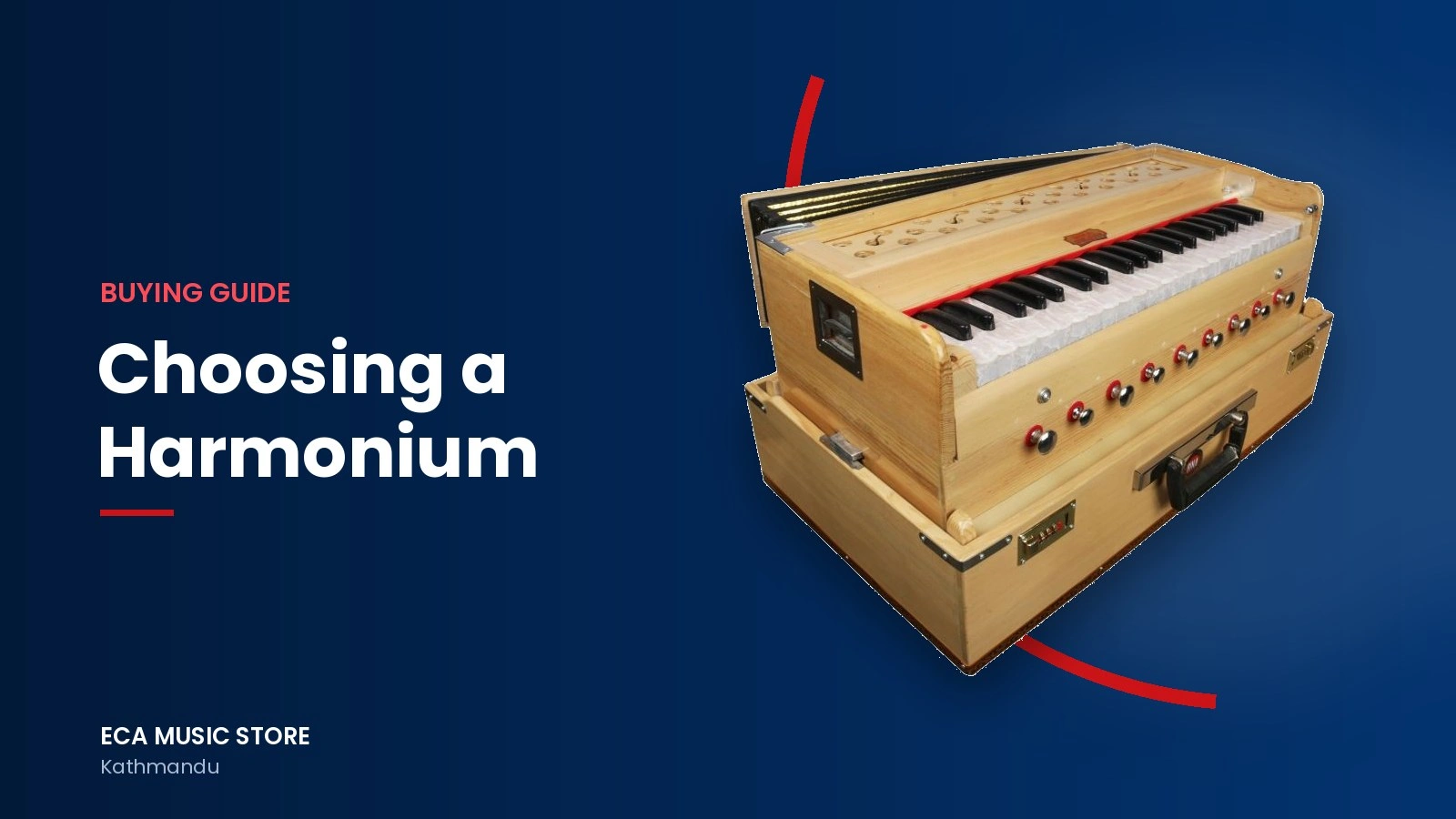
Harmonium Buying Guide: Octaves, Reeds, Stops - and What Bina Super Means
What octave range to choose, why double reeds matter, what the drone stops do, and how to look after a harmonium through the monsoon.
 Instrument Care
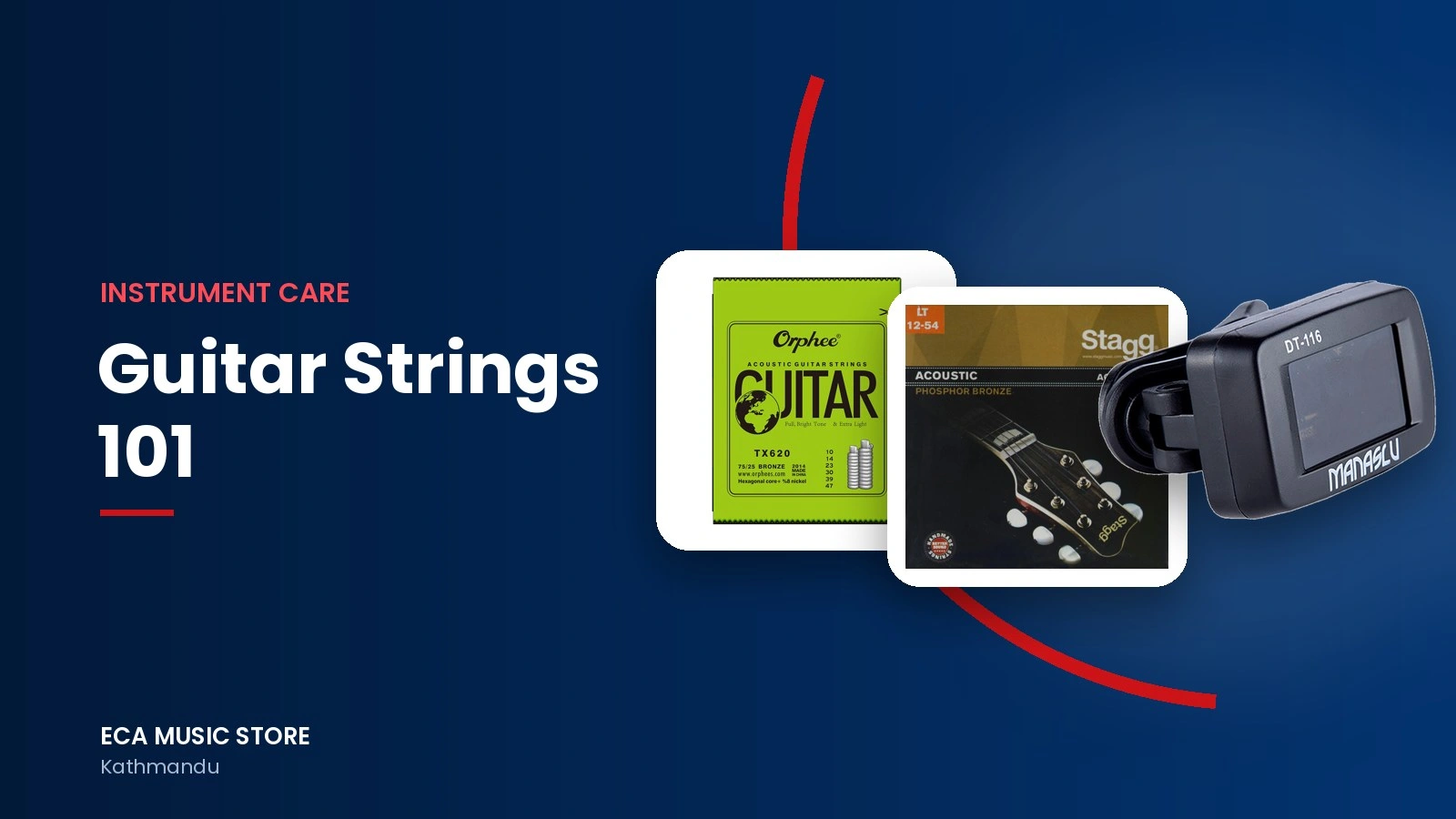
Guitar Strings 101: Gauges, Materials and When to Change Them
What .010 and .011 mean, phosphor bronze versus nickel, how to tell your strings are dead, and how to change them without the frustration.
 Learn And Play
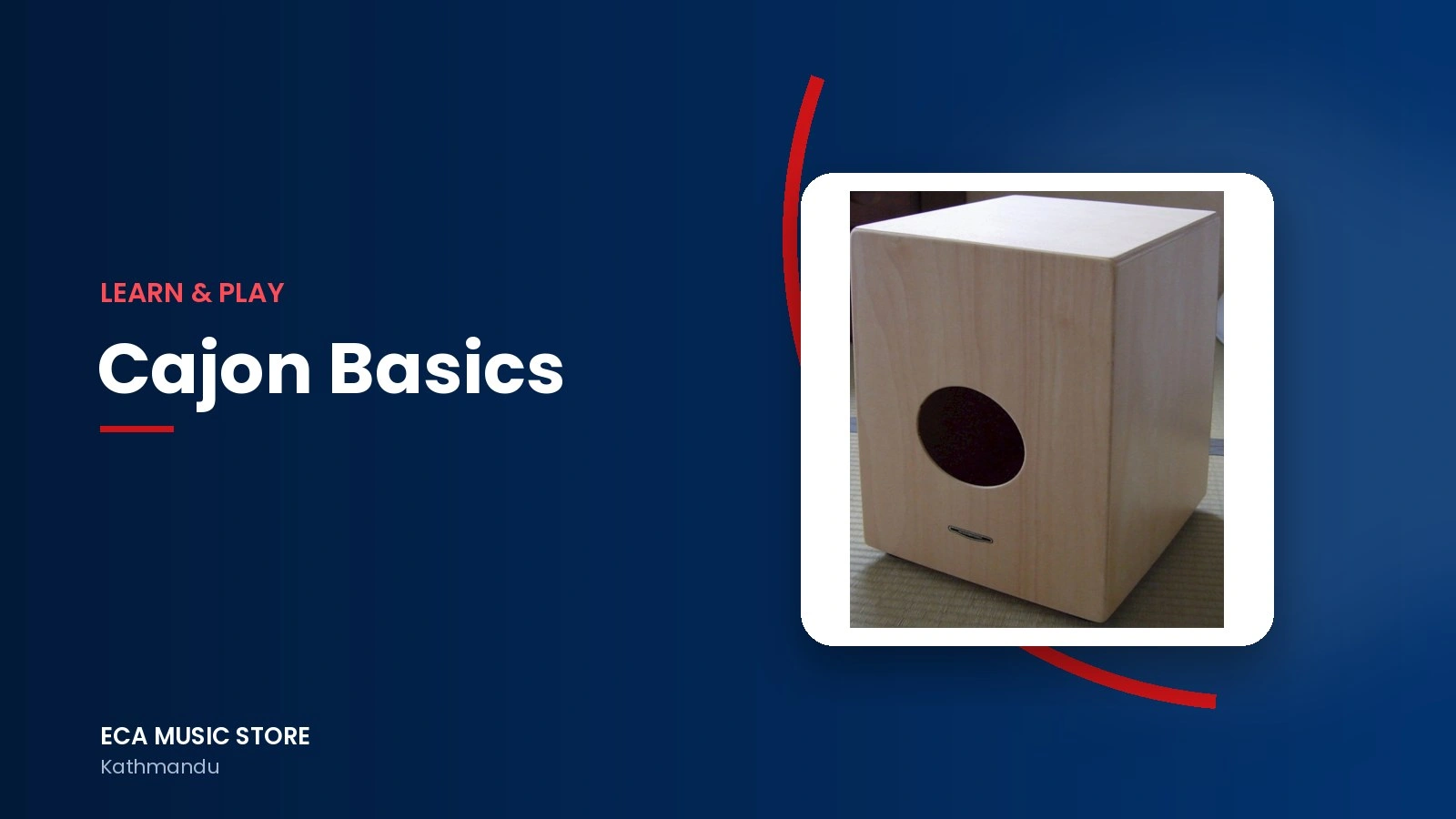
Cajon for Beginners: The Easiest Drum to Start With
A drum you sit on, play with your hands and carry anywhere. What a cajon is, how it makes bass and snare sounds, and the first beats to learn.