Fresh strings are the cheapest upgrade a guitar can get. They make an ordinary guitar sound bright again, stay in tune better and are easier on your fingers. Here is what the numbers on the packet mean, and when it is time for a new set.
What the gauge numbers mean
String sets are named by the thickness of the thinnest and thickest strings, in thousandths of an inch. 10-47 means the high E string is 0.010 inch and the low E is 0.047 inch.
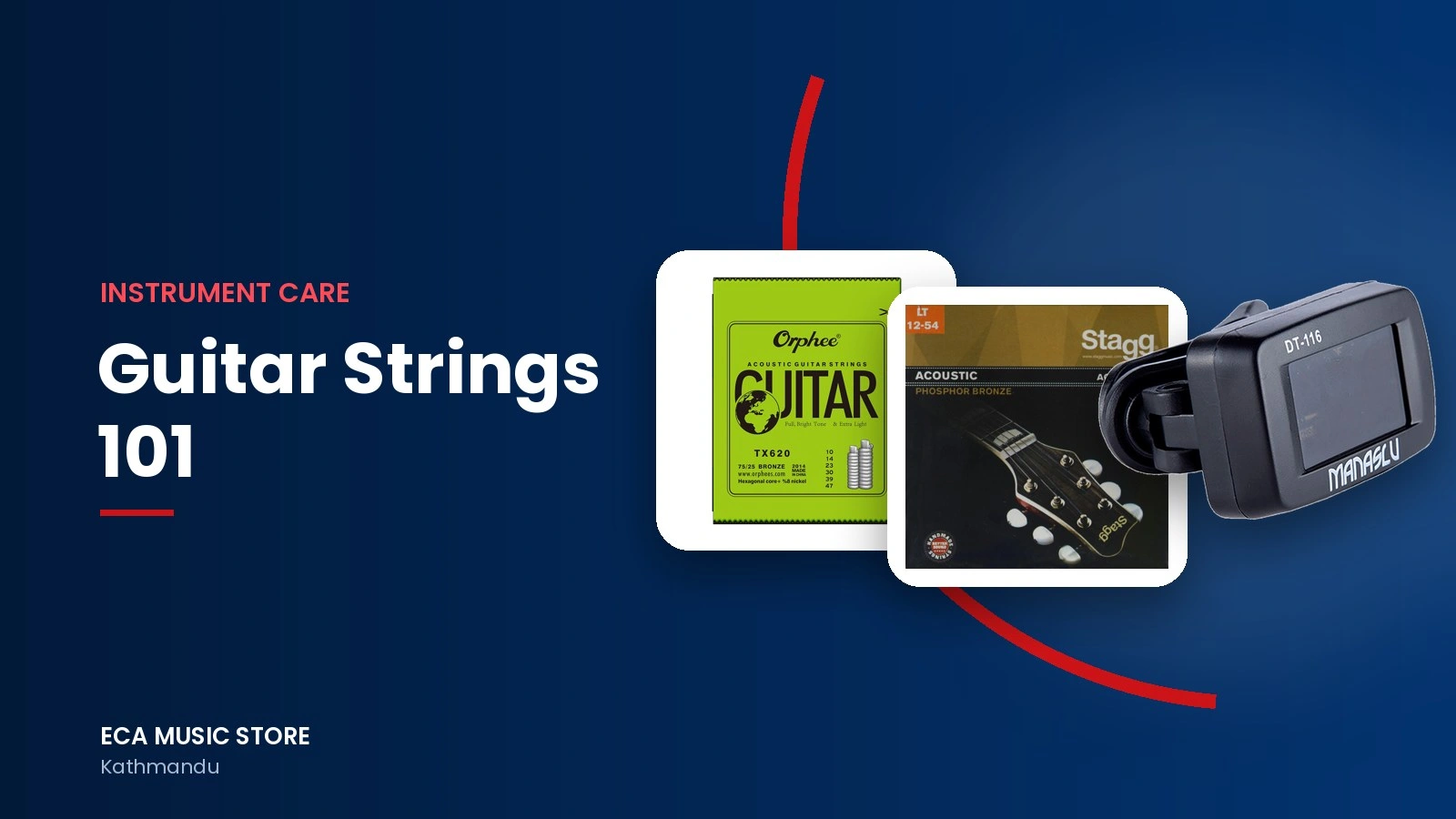
- Extra light (10s) - the easiest to press, ideal for beginners. The Orphee TX620 is a 10-47 set.
- Light (11s or 12s) - a fuller, louder sound with a little more effort under the fingers. Orphee's TX630 is an 11-52 set, and Stagg's AC-1254 a 12-54.
If your fingers hurt or chords are hard to hold down, try a lighter gauge first.
Materials
- Phosphor bronze - the most common acoustic string: warm, balanced and long-lasting.
- 80/20 bronze - brighter and crisper, but loses its shine sooner.
- Nickel-plated steel - the standard for electric guitars, like the Stagg EL-1046 (10-46).
- Coated strings - a thin coating slows down rust and dirt, so they sound fresh for longer.
Never fit steel strings to a classical guitar made for nylon - the extra tension can damage it.
When to change your strings
- The sound has gone dull and flat, even after tuning.
- The guitar will not stay in tune, or notes sound out of tune higher up the neck.
- The strings look dark, rough or rusty, or feel gritty.
Someone playing every day will usually want new strings every couple of months; occasional players can go longer. Sweat and Kathmandu's monsoon humidity both shorten string life, so wiping the strings with a dry cloth after playing makes a real difference.
Broke just one string?
You do not always need a full set. Single strings, numbered 1 (thinnest) to 6 (thickest), let you replace only the one that broke - see our single guitar strings.
Changing strings, the easy way
- Change one string at a time, so the neck keeps its tension and you never lose track.
- Use a string winder - it turns the tuning key in a fraction of the time, and the same tool cuts the ends and lifts the bridge pins.
- Leave two or three turns of string around the tuning post.
- Stretch each new string gently along its length, retune, and repeat a few times. New strings stretch, which is why they go out of tune at first.
- Tune up with a clip-on tuner.
Buying from ECA Music Store
Every instrument we sell is 100% genuine, our instruments come with warranty, and our team is happy to help you compare models before you decide. We deliver across the Kathmandu Valley.


Frequently asked questions
Related stories
 Traditional Instruments
Madal, Tabla, Bansuri and More: A Beginner's Guide to Nepali and Indian Folk Instruments
The instruments behind Nepali folk songs, bhajan and kirtan - what each one is, how it is played and which one suits a beginner.
 Learn And Play
Cajon for Beginners: The Easiest Drum to Start With
A drum you sit on, play with your hands and carry anywhere. What a cajon is, how it makes bass and snare sounds, and the first beats to learn.
 Traditional Instruments
Harmonium Buying Guide: Octaves, Reeds, Stops - and What Bina Super Means
What octave range to choose, why double reeds matter, what the drone stops do, and how to look after a harmonium through the monsoon.