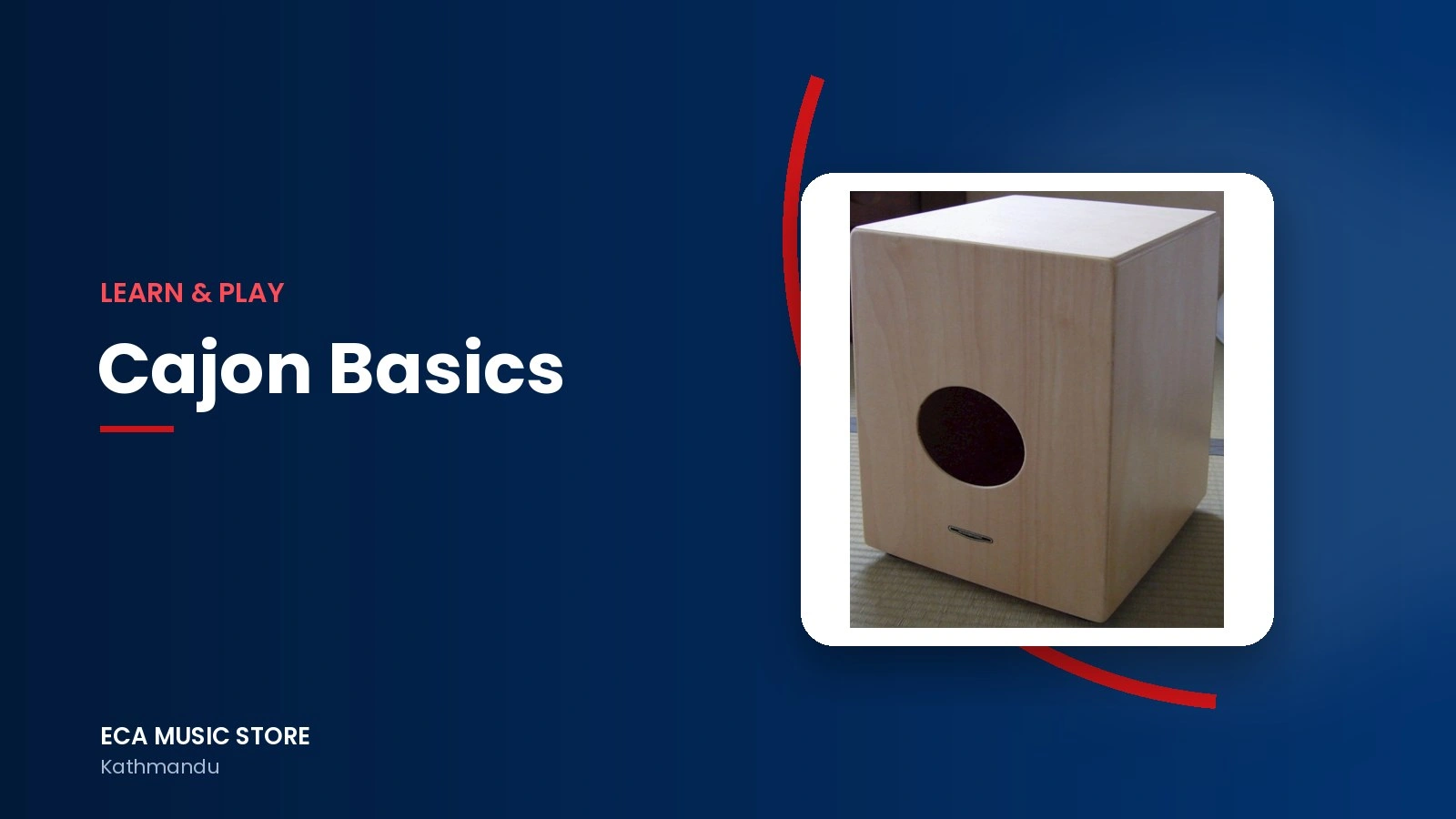
If you have been to an unplugged session in Kathmandu, you have probably seen someone sitting on a wooden box and playing it like a drum kit. That box is a cajon (say "ka-hon"), and it may be the easiest way to start drumming.
What is a cajon?
The cajon comes from Peru, where musicians turned wooden boxes into drums. Today it is a favourite for acoustic gigs, cafés, church groups and jam sessions because it is compact, needs no setup and sounds surprisingly full. You sit on it and play the front face, called the tapa, with your hands. A sound hole at the back lets the bass out.
Two sounds that make every beat
- Bass - strike the centre of the tapa, a little above the middle, with a relaxed flat hand. Let the hand bounce off.
- Slap (snare) - strike near the top edge with your fingers. Most cajons have snare wires inside that add a crisp buzz, like a snare drum.
Your first beat
Count slowly: 1 - 2 - 3 - 4. Play a bass on 1 and 3 and a slap on 2 and 4. That is the backbeat behind most pop songs. Keep it slow and even, then play along to a song you know. Speed comes later; steady timing comes first.
How to choose a cajon
- Snare or no snare - most players want the snare buzz for pop and rock. Snare-less cajons give a warmer, more traditional sound.
- Front plate - a thin, responsive tapa makes the slap easier to play.
- Comfort - you will sit on it for an hour at a time, so the height and top surface matter.
- Build - a well-made body gives a deeper bass and lasts longer.
Browse our cajons and percussion, including the CMC Prelude with built-in snare wires and the Nepali-made Bajra cajon.
Cajon or drum kit?
A cajon is quiet enough for an apartment, fits in a car boot and suits acoustic music. If your goal is to play in a band with electric guitars, a full kit such as the Tama drum set is the next step - and a practice pad lets you work on stick technique silently at home.
Buying from ECA Music Store
Every instrument we sell is 100% genuine, our instruments come with warranty, and our team is happy to help you compare models before you decide. We deliver across the Kathmandu Valley.


Frequently asked questions
Related stories
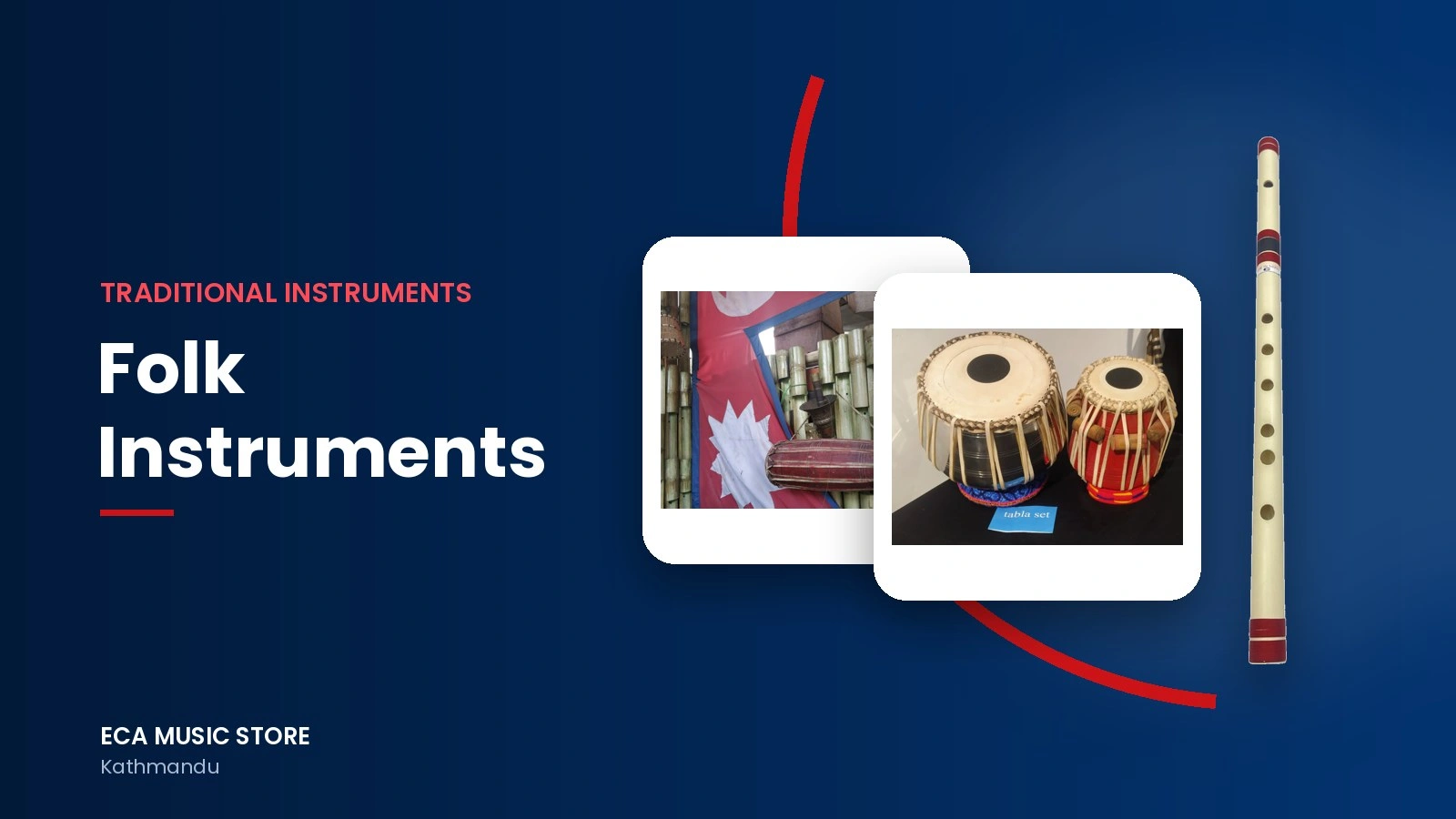 Traditional Instruments
Madal, Tabla, Bansuri and More: A Beginner's Guide to Nepali and Indian Folk Instruments
The instruments behind Nepali folk songs, bhajan and kirtan - what each one is, how it is played and which one suits a beginner.
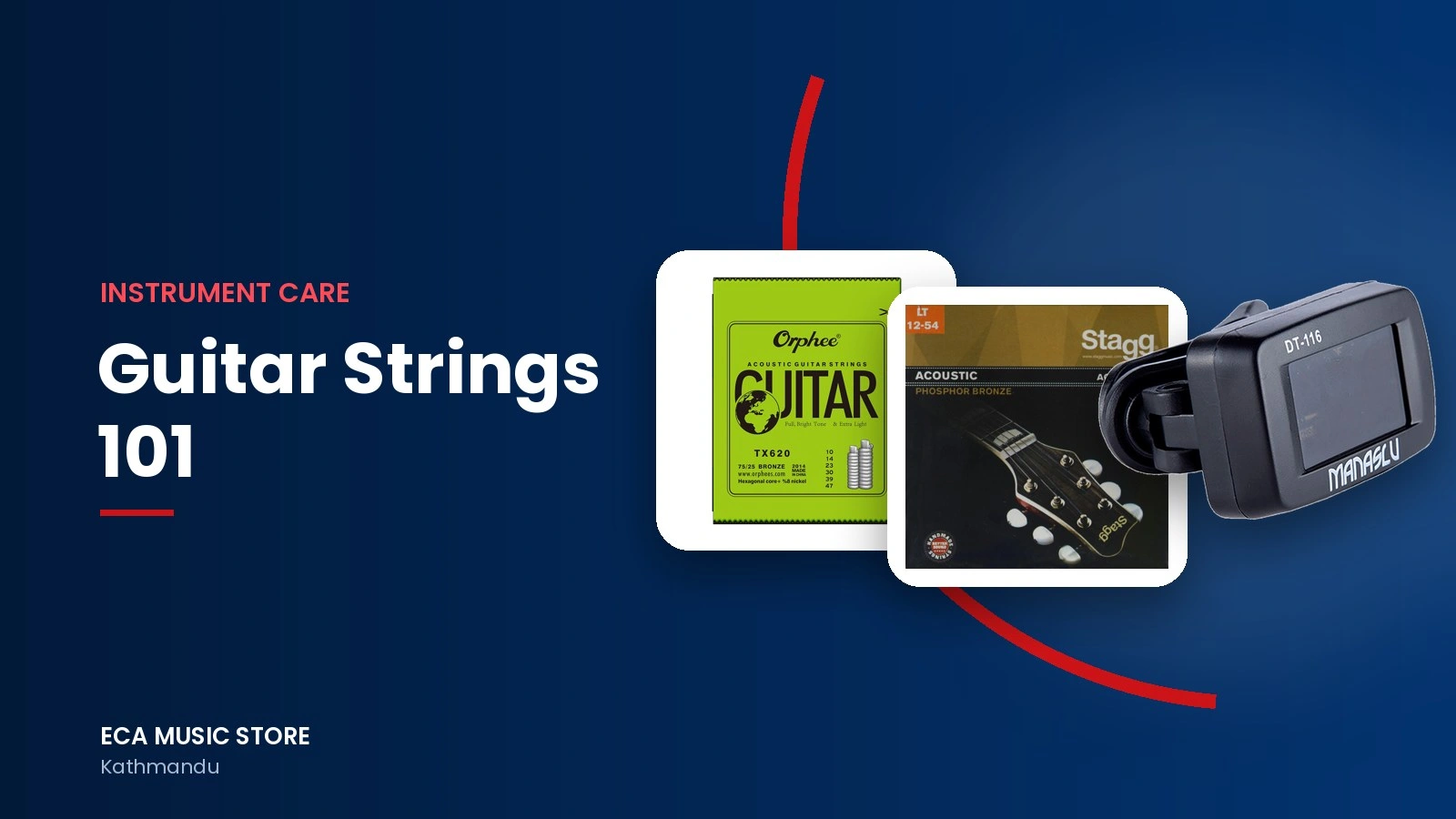 Instrument Care
Guitar Strings 101: Gauges, Materials and When to Change Them
What .010 and .011 mean, phosphor bronze versus nickel, how to tell your strings are dead, and how to change them without the frustration.
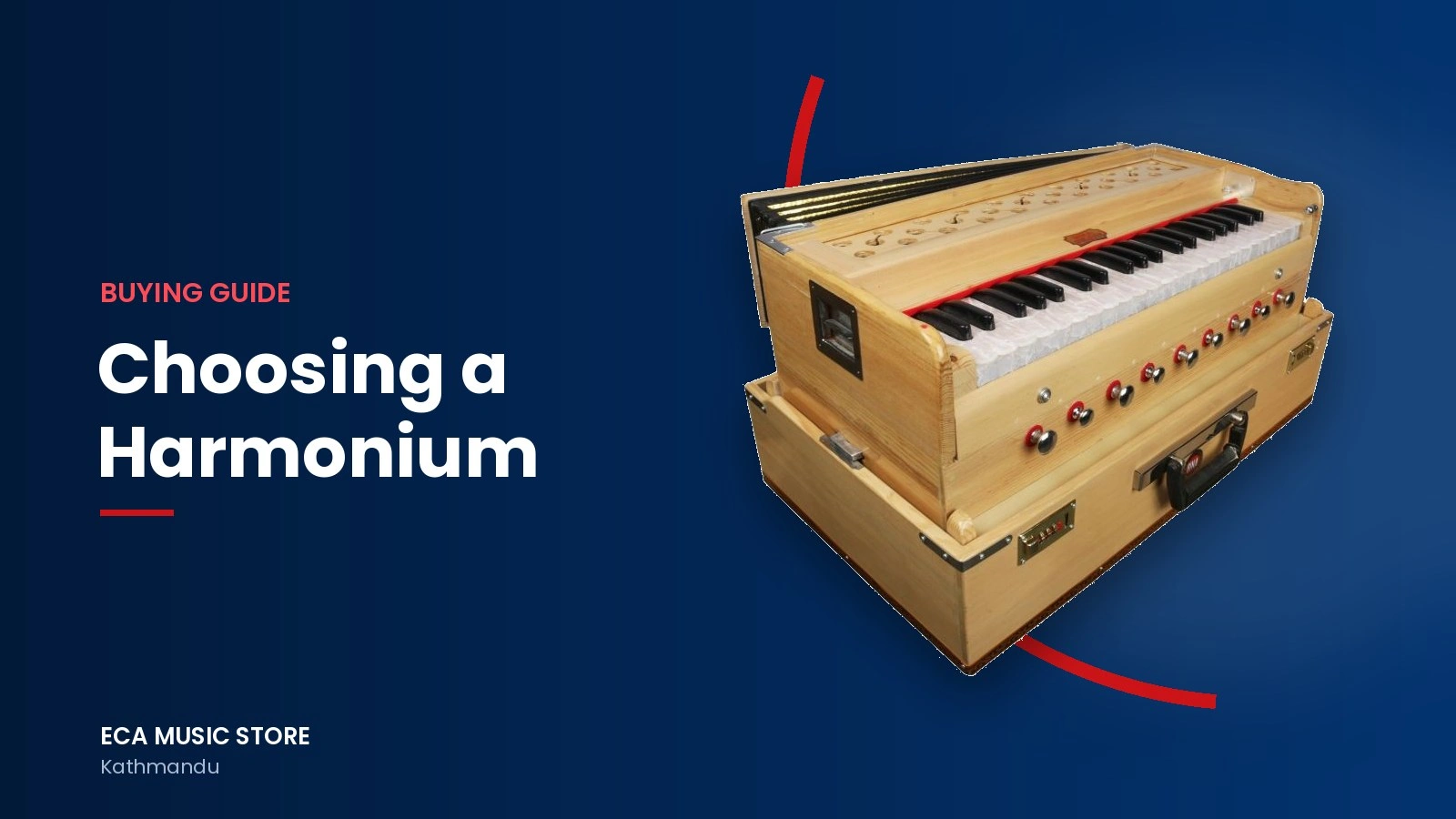 Traditional Instruments
Harmonium Buying Guide: Octaves, Reeds, Stops - and What Bina Super Means
What octave range to choose, why double reeds matter, what the drone stops do, and how to look after a harmonium through the monsoon.