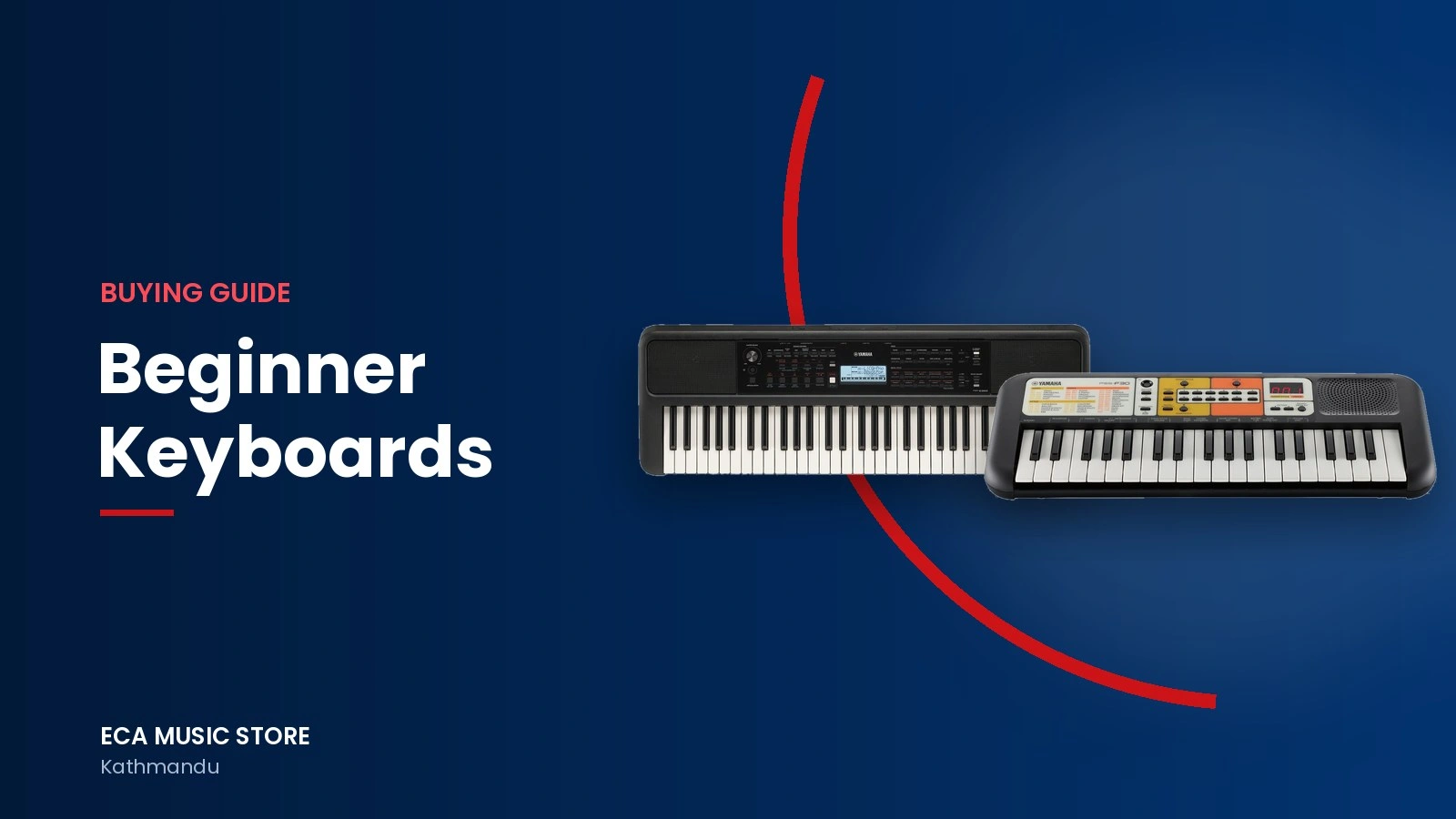
Walk into any music shop and you will see keyboards with a few dozen keys and keyboards with hundreds of sounds. The right one depends on who is going to play it, and how seriously. Here is what actually matters.
1. How many keys?
- 32 to 37 mini keys - small keys for small hands. Great as a first keyboard for young children, like the Casio SA-50 (32 keys) or the Yamaha PSS-F30 (37 keys).
- 44 keys - a step up for older children, such as the Casio SA-80.
- 61 full-size keys - the standard for anyone taking lessons. Full-size keys build the right finger habits, and 61 keys cover almost everything a beginner and intermediate player will learn.
If the player is ten or older, or is joining a music class, go straight to 61 keys - it avoids buying twice.
2. Touch sensitivity
On a touch-sensitive keyboard, a key played harder sounds louder - just like a piano. It is what lets you play with expression, and it matters more as you improve. The Casio CT-X700 and the Yamaha PSR-E383 both have it. Simpler models such as the Casio CT-S100 play at one volume, which is perfectly fine for learning notes, chords and songs.
3. Sounds and rhythms - more is not always better
Hundreds of tones are fun, but a beginner will spend most of their time on piano, a few organ and string sounds and some accompaniment rhythms. Listen to the main piano sound before anything else: it is the one you will hear every day.
4. Learning features
Built-in lessons can be a real help for self-learners. Casio keyboards include lesson songs with a step-by-step mode, and Yamaha's portable keyboards include its Keys to Success lessons. Many models also connect to a phone or computer through USB for apps and recording.
5. Power and portability
Most portable keyboards run on AA batteries or an AC adaptor. For daily practice an adaptor saves a lot of batteries - use the one made for your model, such as the Casio AD-E95100L for Casio's portable range. The slim Casiotone CT-S models are light enough to carry to class.
Casio or Yamaha?
Both are reliable brands with a long record in beginner keyboards, and you will not go wrong with either. The honest answer is to listen: try the piano sound and the feel of the keys on each, and pick the one you enjoy playing. See our full keyboard range.
Useful extras
- A keyboard stand so the keys sit at the right height.
- Headphones for quiet practice, like the Audio-Technica ATH-M20x.
- A music stand for lesson books.
Buying from ECA Music Store
Every instrument we sell is 100% genuine, our instruments come with warranty, and our team is happy to help you compare models before you decide. We deliver across the Kathmandu Valley.


Frequently asked questions
Related stories
 Buying Guides
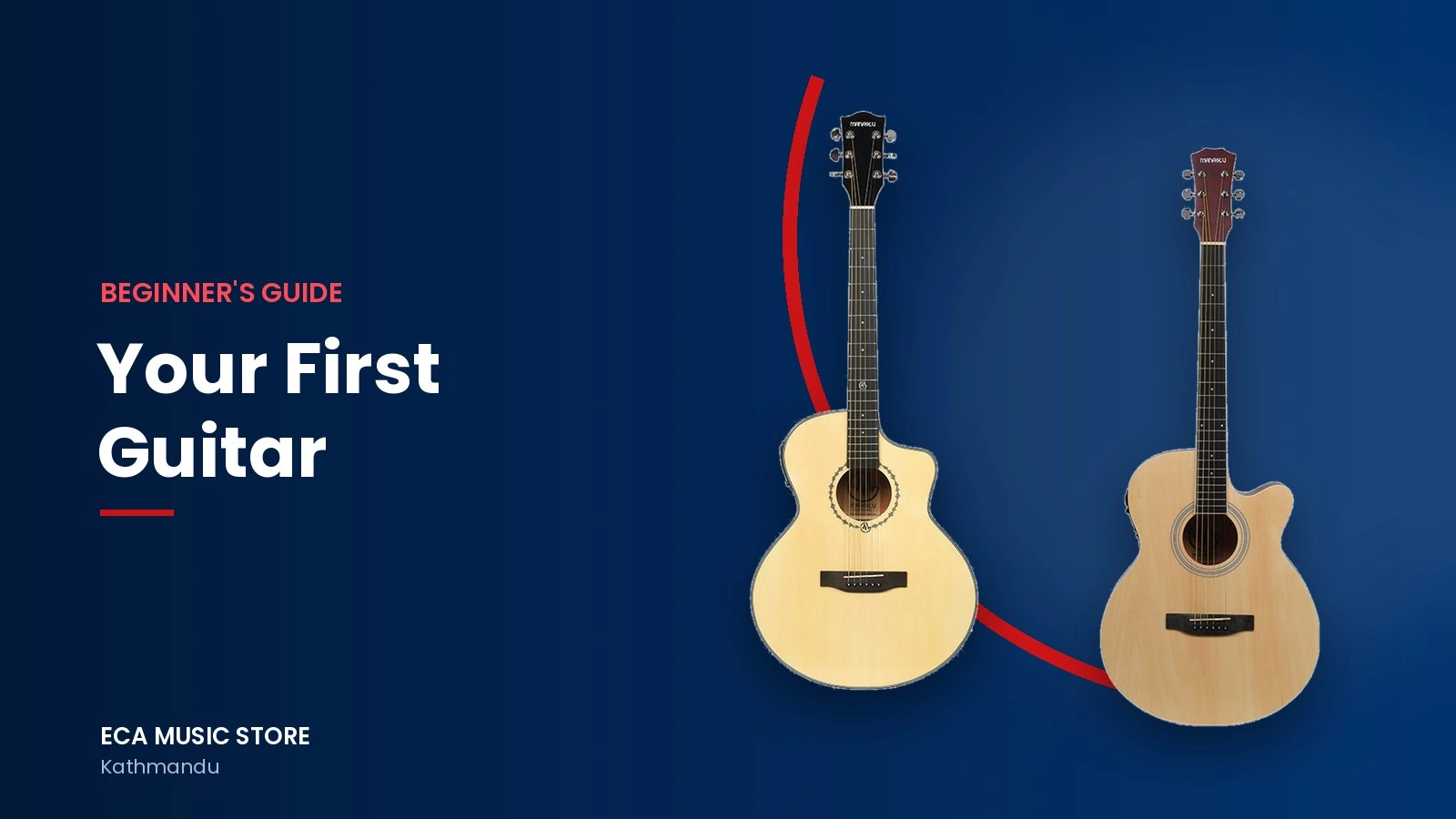
How to Choose Your First Guitar: A Beginner's Guide
Acoustic or semi-acoustic, 38 or 41 inches, steel or nylon? A plain-English guide to picking a first guitar you will actually keep playing.
 Traditional Instruments
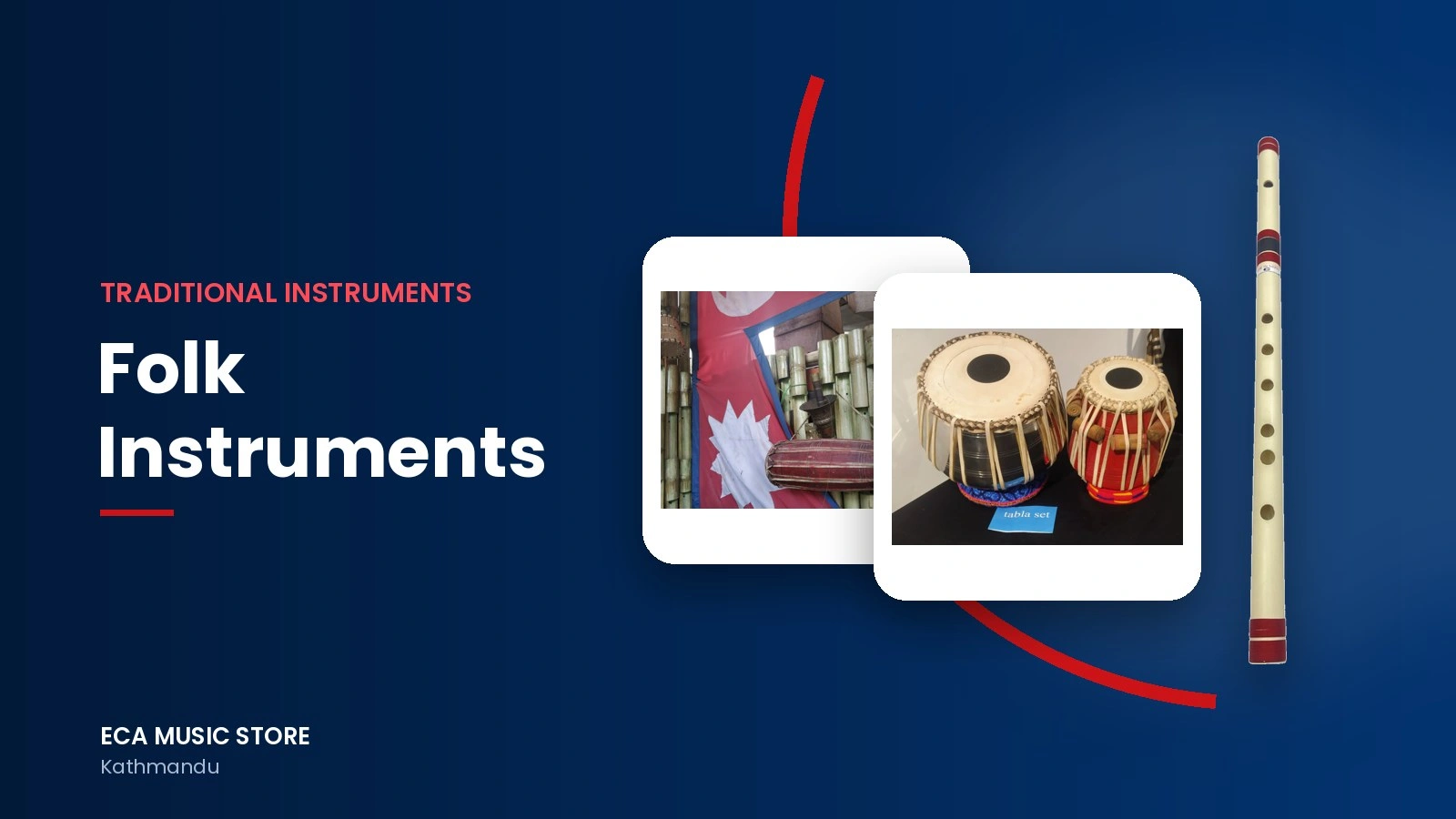
Madal, Tabla, Bansuri and More: A Beginner's Guide to Nepali and Indian Folk Instruments
The instruments behind Nepali folk songs, bhajan and kirtan - what each one is, how it is played and which one suits a beginner.
 Instrument Care
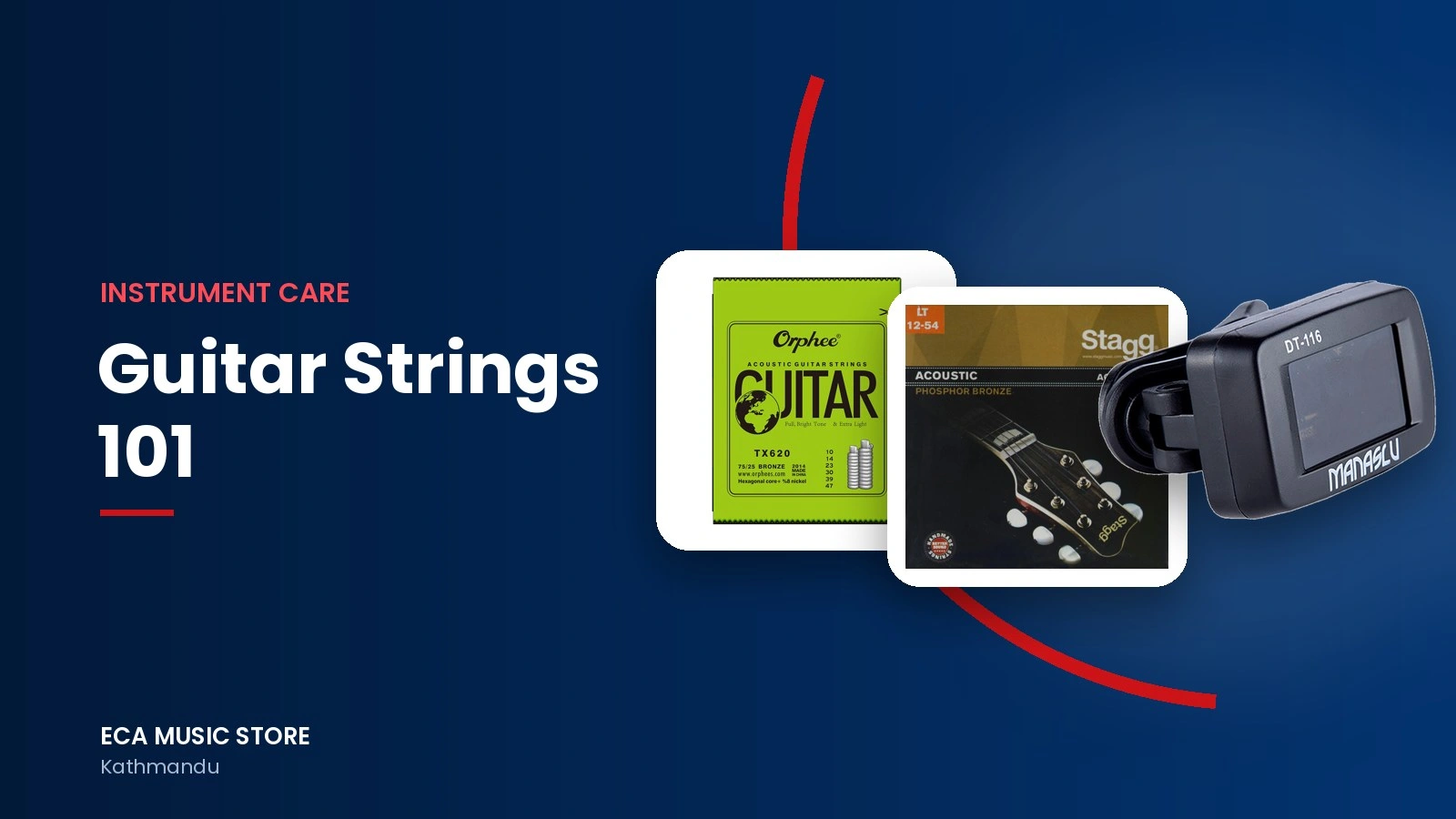
Guitar Strings 101: Gauges, Materials and When to Change Them
What .010 and .011 mean, phosphor bronze versus nickel, how to tell your strings are dead, and how to change them without the frustration.